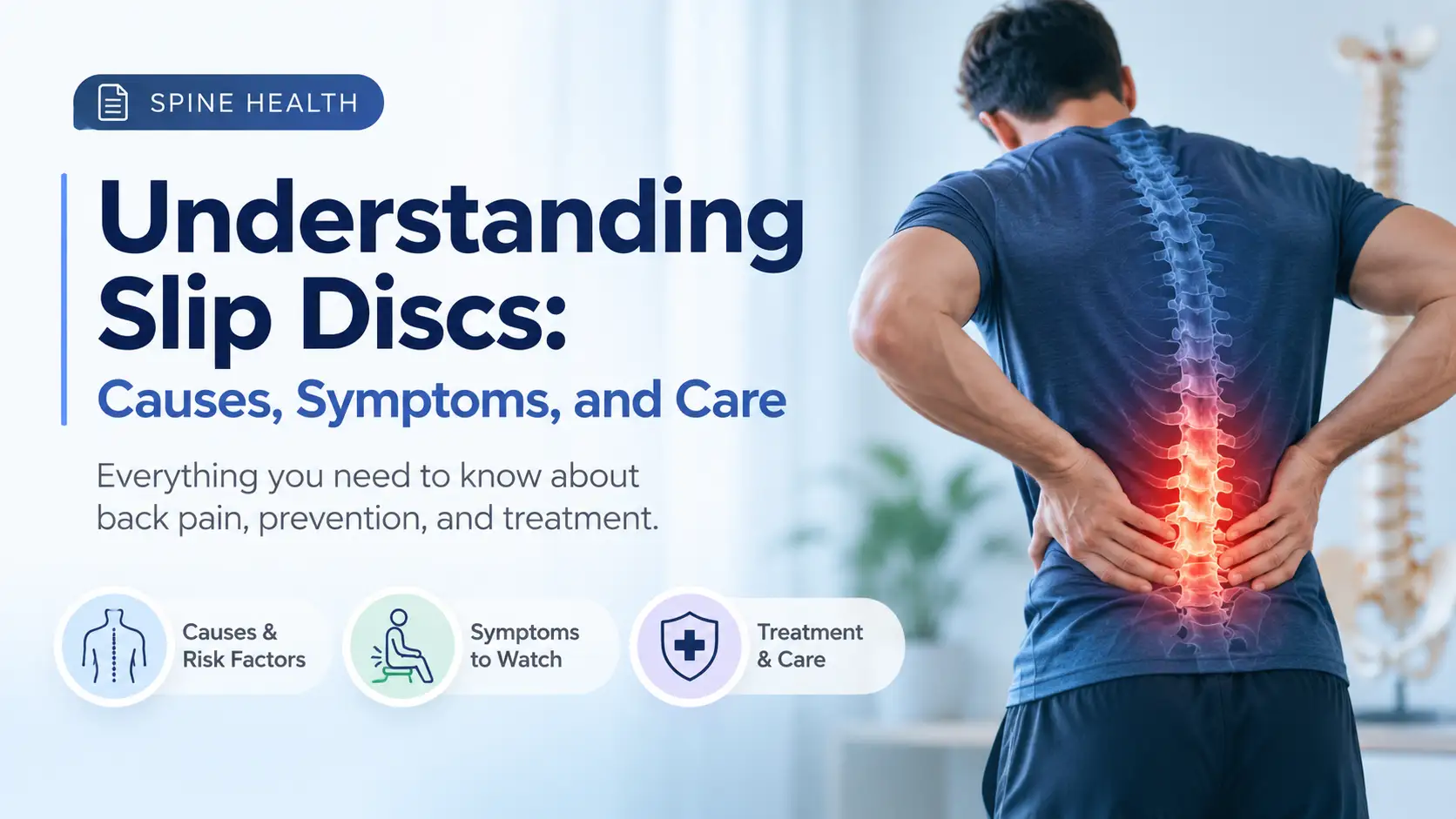
A herniated disc—frequently referred to as a "slip disc"—is one of the most common causes of acute back pain and leg pain (sciatica). The spinal column is made up of a series of bones (vertebrae) cushioned by rubbery cushions called spinal discs. When the soft jelly-like center of a disc pushes through a tear in the tougher exterior, it can irritate neighboring nerves.
"Over 90% of slip disc cases resolve successfully without any surgical intervention. A combination of structured physical therapy, postural changes, and medication is usually our first line of approach."
While many cases improve with rest and therapy, you must seek immediate medical evaluation if you experience a loss of bladder or bowel control, progressive muscle weakness (such as foot drop), or sudden loss of sensation in your inner thighs and saddle area. These are symptoms of Cauda Equina Syndrome and may require emergency surgical decompression.