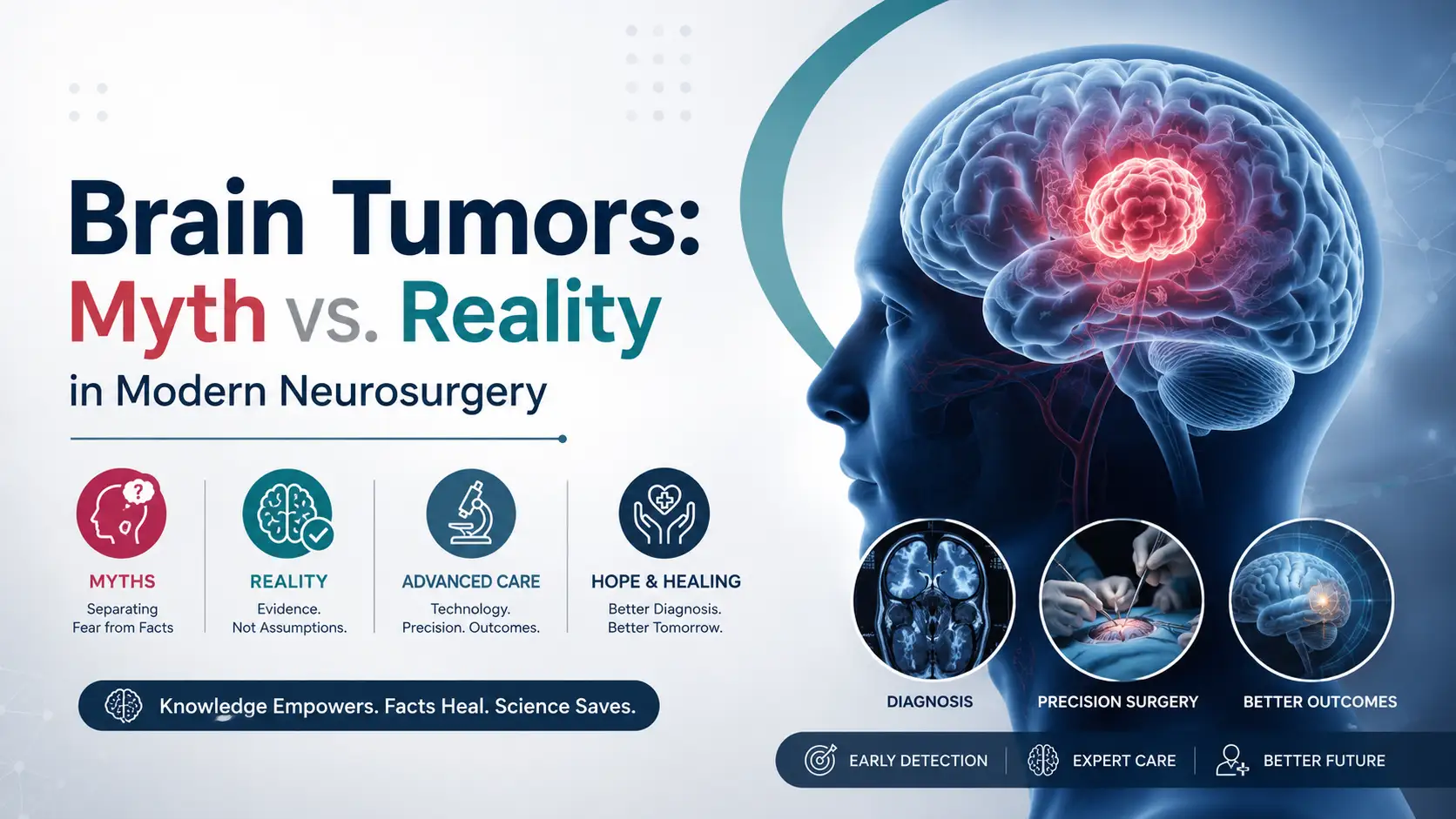
Receiving a brain tumor diagnosis is undeniably one of the most frightening experiences a patient can go through. However, there are many misconceptions surrounding brain tumors that lead to unnecessary panic. Understanding the difference between myths and medical realities can empower patients to make informed decisions.
Reality: This is untrue. More than 50% of all diagnosed brain tumors are benign (non-cancerous). Benign tumors, like meningiomas or pituitary tumors, grow slowly and do not spread to other tissues. Once surgically removed, they often do not return.
Reality: In the past, brain surgery carried higher risks. Today, with micro-neurosurgical navigation, intraoperative mapping, and high-definition microscopes, surgeons can pinpoint tumor boundaries within millimeters, preserving vital brain centers responsible for speech, memory, and movement.
"State-of-the-art neuronavigation acts like a GPS for the brain, helping us avoid critical structures during resection. This makes modern brain tumor surgery far safer and highly precise."
While symptoms depend on the tumor's location, common indicators include: headaches that are worse in the morning and accompanied by nausea, unexplained changes in vision or hearing, difficulty with balance, speech changes, or new onset of seizures. If you experience these, a consult with a neurosurgeon and an MRI brain scan are key to a clear diagnosis.